Which AI Model is actually the best?
If you’re asking your team which AI model is the best, you might be focusing on the wrong question.
It’s similar to asking if a Ford F-150 or a Mini Cooper is the better car. If you need to haul 50 sheets of drywall, the Mini Cooper won’t help. But if you’re trying to parallel park in downtown Stockholm during rush hour, the F-150 will be tough to manage.
So what is considered “best”? In my opinion, it depends on two things: how well a model fits the task and how efficiently it works.
If you’re still choosing AI licenses based on social media buzz or flashy benchmarks instead of real cost-per-task, you’re paying top dollar for a supercar that just sits in traffic.
Here’s a straightforward look at which models perform best for different tasks right now, and where you might run into hidden costs. This is subjective, so don’t make any financial decisions based on that.
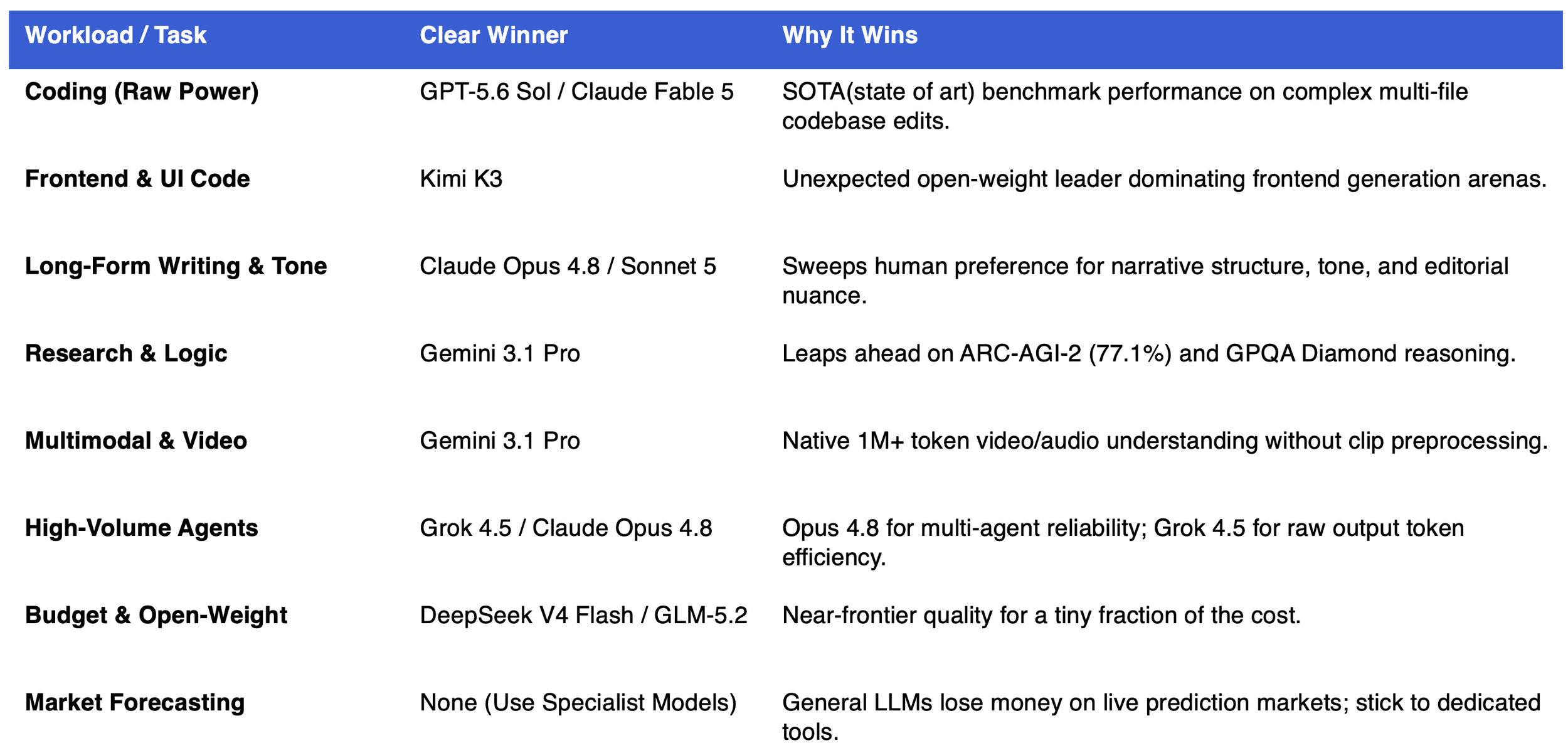
Which AI wins where?
The "Token Trap": sticker price vs. cost per task
Before you choose a model, it’s important to understand how API pricing works.
Marketing teams often focus on the price per million tokens, but that number doesn’t tell the whole story. What really matters is how much you pay for each completed task.
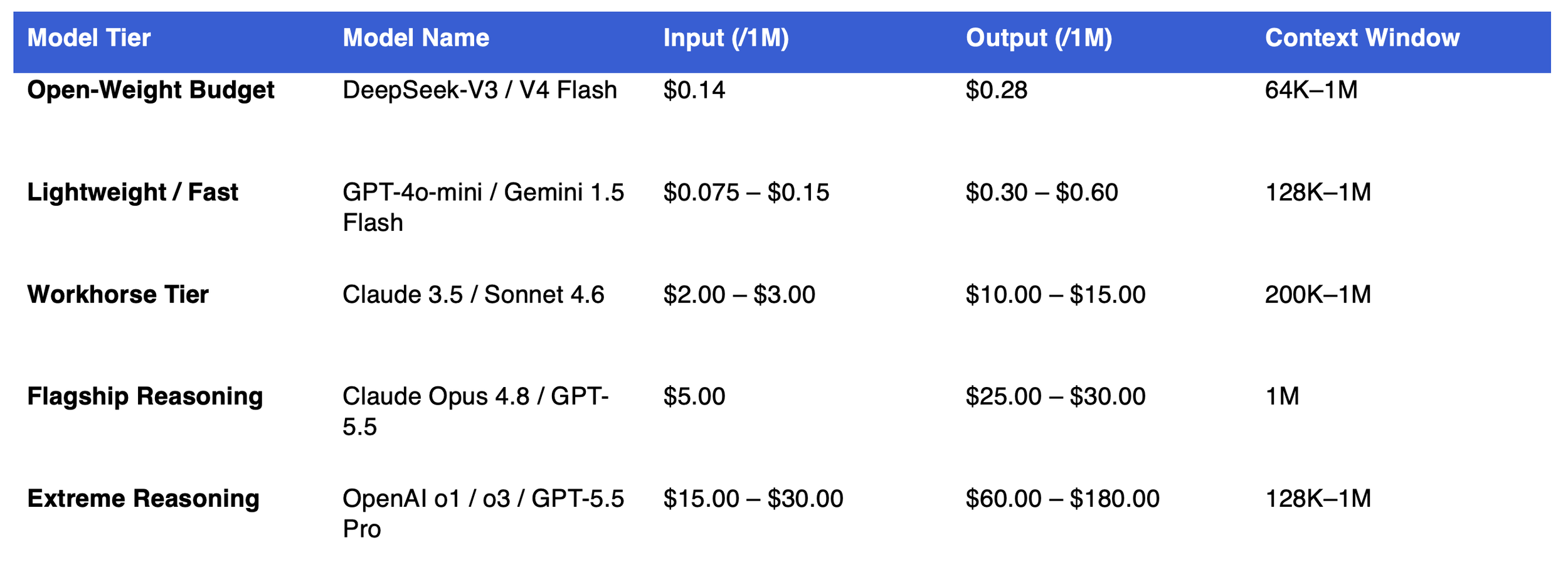
Models that perform extensive reasoning often use thousands of extra tokens as they work through problems. A model that seems ten times cheaper per token can actually cost sixty times more per task if it uses 60,000 tokens to solve something another model handles in 15,000.
API Price Benchmark (USD per 1M Tokens)
Three rules to cut your API bill by 50–90%
Prompt caching is essential. Models like Anthropic and DeepSeek offer up to a 90% discount on cached input tokens. If your agent uses the same large system prompt or brand guide over and over, make sure to cache it.
Use asynchronous batching for back-office tasks. Processing reports, tagging data, or handling overnight content queues with batch APIs can cut your input and output costs by half with OpenAI, Anthropic, and Google.
Be careful with the context window. Google Gemini’s 1M- to 2M-token context is impressive, but it costs double if your input exceeds 128,000 tokens. Remove any extra context before sending large API requests.
Deep-Dive: fitting the tool to the job
Editorial, Brand Voice & Copywriting
The Winner: Claude Opus 4.8 & Claude Sonnet
When Google launched Gemini 3.1 Pro, even its own comparison charts showed that Gemini fell short in one area: people preferred Claude for creative writing.
If your marketing work needs to keep a consistent brand voice over long pieces, handle complex details, or sound natural, Claude is still the top choice.
Pro tip: For lots of short posts or ad copy variations, save your Opus tokens. Use GPT-4o-mini or Claude Haiku for lighter copy tasks.
Deep Analytical Research & Multimodal Assets
The Winner: Gemini 3.1 Pro
Gemini is the clear leader for combining different types of content. You can put a full one-hour YouTube webinar, a 300-page PDF, and raw audio files into a single prompt without having to transcribe or split them first. This saves a lot of time in your workflow.
It also scores highest on tough logic benchmarks (GPQA Diamond and ARC-AGI-2). Use Gemini for competitor analysis, summarizing video decks, and processing large documents.
Agentic Marketing & Martech Automation
The Winners: Claude Opus 4.8 (Reliability) & Grok 4.5 (Cost-per-Task)
If you’re running multi-step automated workflows, such as lead scoring, CRM enrichment, or campaign routing, reliability is more important than speed.
Claude Opus 4.8 is great at catching its own mistakes, so it’s about four times less likely to send errors through an automated process. On the other hand, Grok 4.5 uses up to four times fewer output tokens for agentic tasks, making it the best value for handling lots of background work.
Market & Campaign Forecasting
The Winner: None (Stop Using General LLMs for This)
If a vendor claims their general LLM can accurately predict market trends, customer churn, or stock prices, you should be skeptical.
In benchmark tests where LLMs traded real money on prediction platforms, all major models lost money (down -16% to -30%). For predictive analytics, use specialized machine learning models designed for numbers, like those built for weather or physics.
Simple rules to stay effective
Don’t always use flagship models by default. Send about 70% of routine tasks, like data parsing, summarizing, or tagging, to budget options like DeepSeek V4 Flash or Gemini Flash. Save Opus or GPT-5 for complex strategy and creative work.
Focus on token usage, not just subscription cost. Make sure your marketing tech stack uses prompt caching. If your team sends the same 10,000-token system prompt every time without caching, you’re wasting money.
Set up workflows that use more than one model. Today’s marketing stack shouldn’t depend on just one LLM provider. Use Gemini for research and video, Claude for editing drafts, and open-weight models for backend data tasks.
In AI, sticking to one brand just eats into your budget. Choose the right tool for each job, keep an eye on how many tokens you use, and stay flexible with your tech stack.